
Artificial intelligence workloads are changing the scale and operating profile of data centers. AIDC infrastructure must accommodate high-density IT loads, fast deployment expectations, and demanding availability requirements while coordinating power, cooling, monitoring, and operations. A successful installation depends on how well technical choices match the site and its users. A sound project brief explains what must be measured, who will act on alarms, and how performance will be verified after installation. The central design task is to connect the selected equipment with a clear site requirement.
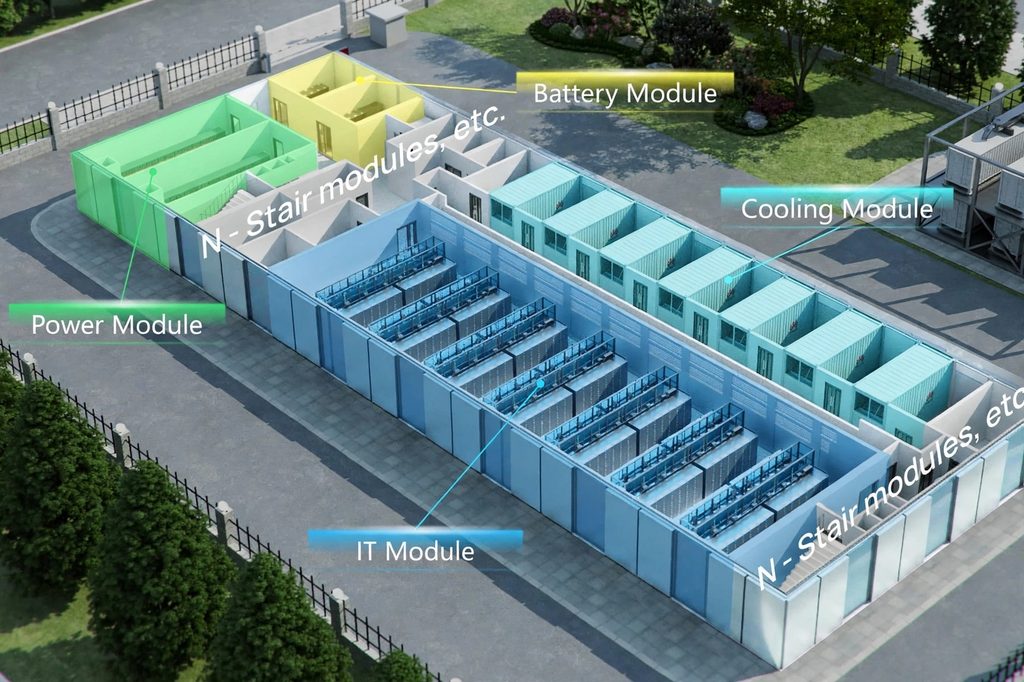
An example of the infrastructure discussed in this article.
Allow the infrastructure to follow hardware evolution
Accelerator generations and server configurations can change faster than building infrastructure. The facility plan should identify which elements can be expanded or reconfigured and which would require major construction. Reserved electrical capacity, cooling interfaces, floor loading, and cable pathways should be based on a documented growth scenario.
Coordinate security with remote management
Connected monitoring can improve visibility, but access to facility controls must be governed carefully. Network segmentation, role-based permissions, secure remote access, audit logs, and change approval help reduce operational risk. Security design should include vendors and service partners without granting broader access than their tasks require. For a closer look at the solution scope, review AIDC infrastructure and consider how its documented functions fit the site layout, electrical interfaces, and operating plan.
Plan maintenance before the first fault
Routine inspection, cleaning, firmware updates, component replacement, and emergency isolation all require time and access. The maintenance plan should identify who performs each task, what redundancy remains, and which spares must be held locally. A maintainable design is easier to keep reliable over its operating life.
Use modular delivery where it fits the schedule
A modular approach can standardize repeatable facility blocks and allow construction to proceed in phases. Prefabricated power or cooling modules may reduce some onsite assembly work, but interfaces, transportation limits, lifting plans, and site utilities still need careful coordination. The project schedule should distinguish factory completion from integrated site acceptance. Performance should always be assessed against the actual installation conditions and the complete system boundary.
Set measurable acceptance criteria
The handover should verify electrical performance, cooling capacity, alarm behavior, redundancy transitions, environmental conditions, and the quality of operating documentation. Measurements need a defined boundary and test condition. Clear acceptance criteria prevent a facility from being judged ready simply because equipment has been energized. A project specification for AIDC infrastructure should identify the applicable configuration, installation limits, commissioning checks, and service responsibilities.
Match cooling architecture to heat density
Traditional air cooling can remain suitable for many IT loads, while high-density AI racks may require liquid cooling or an air-liquid hybrid arrangement. The right choice depends on server design, rack power, facility temperature conditions, water availability, and service capability. Cooling interfaces should be agreed with IT suppliers before equipment rooms and pipe routes are finalized.